Bridge Street Mills Bayley Street Mills Clarence Mill North End Mill | River Meadow Mill Stayley (Old) Mills | Castle Hall Mills
The former Bridge Street Mills (53.48131, -2.06375) were located on the south-east side of Bridge St, directly opposite the former Bayley Street Mills (53.4819, -2.06565). Clarence Mill is on the south side of Bayley St on the corner of Clarence St (53.48312, -2.07264). Bridge Street Mills were about 155-yards distant from Bayley Street Mills on the eastern side and Clarence Mill was about 530-yards distant on the opposite side of the river Tame. The company also had a warehouse on Mosley St, Manchester.
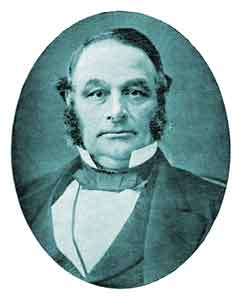
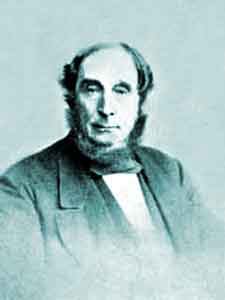
This mill complex was owned by the Bayley Brothers, William (1802-1891), Henry (1804-1875), and Charles James (1807-1861), and the company was styled as William Bayley & Brothers. Bridge Street Mills were built in c.1812 and inherited by the brothers from their mother. Bayley Street Mills were built in the early 1830s on a plot of land known as ‘The Stakes’ and Clarence Mill was built in 1862/63.
Bayley Street Mills were integrated for spinning and weaving and they were designed by Sir William Fairbairn. The principal building was 2-storeys with 1,000 looms on the ground floor and 23,000 mule spindles on the first floor. Power was provided by twin 110 hp beam engines driving one flywheel, designed by Fairbairn. Power was taken off from the toothed rim of the flywheel. Later, the twin beam engines were replaced by a 5,000 HP marine engine.
Henry Bayley alone was working the mills by 1871 and the company was incorporated as Henry Bayley & Sons Ltd in 1875. By this time there were 46,320 mule spindles and 1,200 looms. By 1883 Bridge Street Mills and Bayley Street Mills combined were running 99,300 spindles and 1,700 looms. It is recorded that the mills were weaving cotton printer’s fabric, often called ‘printer’s cloth’ or calico. This fabric was specifically prepared to be printed with patterns.
Bridge Street Mills and Bayley Street Mills ceased cotton production between 1903 and 1906 and subsequently they were demolished leaving no trace of their existence. After WWII Clarence Mill was occupied by Robert Byrom (Stalybridge) Ltd, spinning cotton and rayon on 49,000 mule spindles and 42,000 ring spindles. The mill closed in 1960 and the building was repurposed for multiple occupancy and presently serves as a commercial and industrial site.
William Bayley
William Bayley was a complex figure in the history of Stalybridge. He was a major employer in the town and consequently he played a critical role in the Plug Riots of 1842, which was the first general strike in Britain.
He had cut the pay of his workers by 5% during an economic depression and when he refused to withdraw this, they marched from mill to mill removing the plugs from boilers to stop the machinery.
Despite his conflicts with workers, he became a local benefactor and in 1854 he donated funds for the construction of the Bayley Street Bridge over the river Tame.
This bridge connected Stalybridge and his mills to new roads and wider transportation routes.
He was elected the first Mayor of Stalybridge on 9 May 1857 and he held the office for three consecutive terms, serving from 1857 until 1860.
His election followed the official incorporation of Stalybridge as a Municipal Borough on 5 Mar 1857.
Both mills were located on Northend Rd in the proximity of Knowl St. North End Mill (53.48951, -2.04521) was on the right bank of the river Tame and River Meadow Mill (53.49043, -2.04552) was directly opposite on the left bank of the river Tame. They were built by the brothers James Adshead, Thomas Sidebottom Adshead and William Adshead who traded as James Adshead & Brothers. North End Mill dates from 1851 and River Meadow Mill dates from 1857.
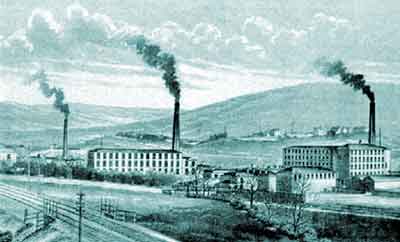
The specific names of the architects for the design of these mills are not recorded in architectural databases. It was common in the mid-19th century for them to be designed by local millwrights in collaboration with the owners.
In 1864 both mills were purchased by Henry Bannerman & Sons and they operated them until the early 1930s. Henry Bannerman & Sons Ltd was incorporated in 1890 and this company also owned and Brunswick Mill, Bradford Rd, Ancoats, Manchester, and Old Hall Mill, Dukinfield. By 1891 the mills were used solely for spinning cotton with 80,000 mule spindles. They produced medium-fine counts of twist and weft using Egyptian and American cotton. 18,720 ring spindles were added by 1920.
In the early 1930s Henry Bannerman & Sons Ltd was taken over by the Lancashire Cotton Corporation Ltd (LCC) due to a decline in the cotton industry and in 1964 LCC it was acquired by Courtaulds Northern Textiles Division.
North End Mill was demolished by 1964. Cotton production ceased at River Meadow Mill in 1967 and the building was then used for other purposes including Futura Rubber Co/Futura Footwear and then S A Driver who specialised in warp knitting, dyeing, printing and finishing. Warp knitting is an industrial loop-forming process where yarns are fed vertically (lengthwise) and intermeshed in a zigzag pattern to form a fabric. The use of River Meadow Mill by other companies was eventually superseded by other nearby industrial developments and consequently it was demolished.
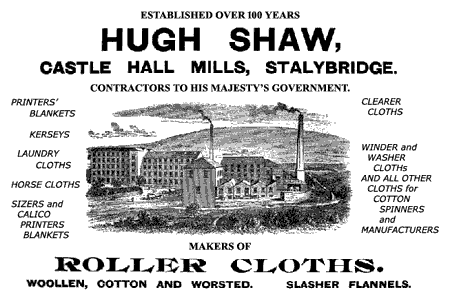
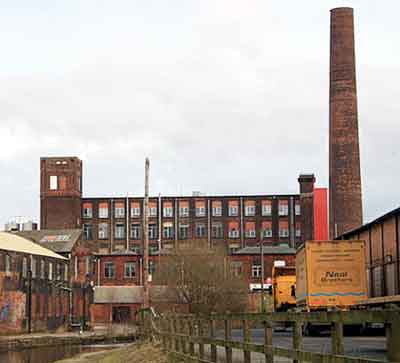
These former mills were located in the Millbrook District of Stalybridge on Grove Rd at its junction with Huddersfield Rd (53.49264, -2.03465). In c.1896 the firm styled Hugh Shaw (aka Hugh Shaw & Sons) moved about 1.1 miles from Castle Hall Mills on Back Grosvenor St, Stalybridge, to Stayley (Old) Mills on Grove Rd, Stalybridge, and then, confusingly, changed the original name to Castle Hall Mills. They were then used for woollen manufacture.
The original Castle Hall Mills were located on Back Grosvenor St, near the Castle Iron Works (approx. 53.48196, -2.05475). The arrangement of Back Grosvenor St has since been altered.
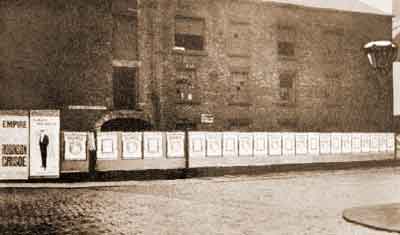
The woollen-manufacturing firm, styled Hugh Shaw (aka Hugh Shaw & Sons), was founded by Hugh Shaw Sr (1766/67-1839) and it passed to his son, Hugh Shaw Jr (1794-1858) and grandson, Harold Kershaw Shaw (1865-1936). The London Gazette for 1849 records that another business partner was John Shaw.
The advertisement below shows that the firm specialised in the manufacture of a variety of cloths used for maintenance purposes in cotton mills.