
Tameside's Ashton Town Centre Conservation Area
This area is good example of a Georgian planned town superimposed on a medieval street layout and it contains a number of good quality historic buildings.
 |
 |
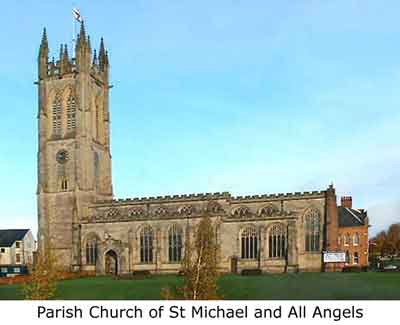
Church of St Michael and All Angels [1]. |
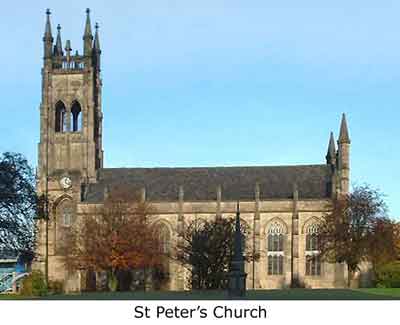
St Peter's Church [2]. |
 |
 |
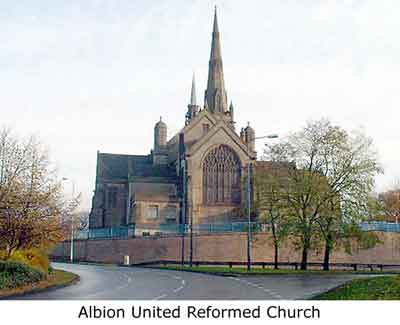
Albion United Reformed Church [3]. |
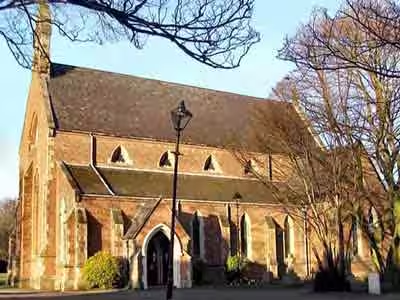
Christ Church [4]. |
 |
 |
Church of St John the Evangelist [5]. |
St James's Church [6]. |
 |
 |
Holy Trinity Church [7]. |
St Augustine's Church [8]. |
 |
|
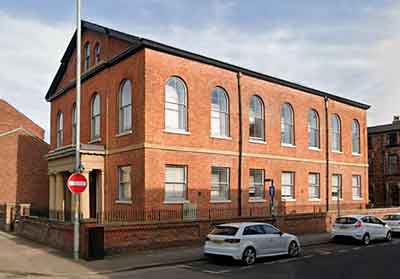
Methodist Church [9]. |
|
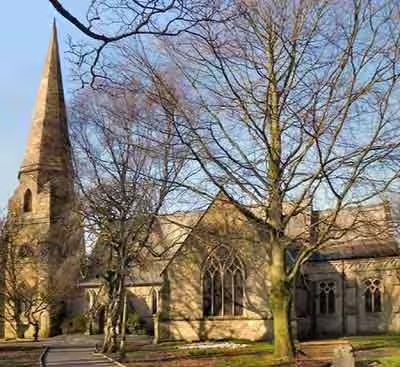
The Church of St Michael and All Angels
 This Anglican church is situated on Stamford St and it dates from C15.
However, the origins of this church are said to date back to 1262 and a church hereabout was mentioned in the Domesday Book of 1086.
Anyhow, it was practically rebuilt in the Gothic Revival style (mainly Perpendicular) during the C19 and early C20.
The north side was rebuilt in 1821, the nave and south side in 1840/44, the east wall of the chancel in 1883, the tower in 1882/88 and the north porch in c.1920.
The architect for the rebuild of the tower was Joseph Stretch Crowther of Manchester.
This Anglican church is situated on Stamford St and it dates from C15.
However, the origins of this church are said to date back to 1262 and a church hereabout was mentioned in the Domesday Book of 1086.
Anyhow, it was practically rebuilt in the Gothic Revival style (mainly Perpendicular) during the C19 and early C20.
The north side was rebuilt in 1821, the nave and south side in 1840/44, the east wall of the chancel in 1883, the tower in 1882/88 and the north porch in c.1920.
The architect for the rebuild of the tower was Joseph Stretch Crowther of Manchester.
The Colours of the 9th Battalion, Manchester Regiment (the 'Ashton Pals') are laid up at St Michael Church.
St Michael and All Angels is listed Grade I, List Enry No. 1162800.
St Michael and All Angels is part of the Parish of the Good Shepherd in Ashton-under-Lyne, along withSt Peter, St James, Holy Trinity, and St Gabriel.St Gabriel (1912), Beaufort Rd, Cockbrook.
Stained glass windows
These windows date from the late C15 and early C16 and they are now positioned along the aisles. They depict the life of St Helena, three saintly kings and members of the Assheton family.
The saintly kings have been identified as Edmund the Martyr (King of East Anglia), Edward the Confessor (King of England) and, tentatively, Henry VI (King of England).
Henry VI is informally regarded as a saint and martyr because miracles were attributed to him.
The three Lancastrian kings of England were Henry IV, Henry V, and Henry VI, who ruled England from 1399 until 1471.

St Helena (c.247-c.330) was the wife of the Roman Emperor, Constantius Chlorus, and the mother of Constantine the Great (c.272-337). It is believed that she was born at Drepanum (later known as Helenopolis) in Asia Minor (Tukey). Later, her husband divorced her but when her son became emperor at Eboracum (York) in 306, he made her the empress dowager. It was her son who persuaded her to become a Christian.
St Peter's Church
This Anglican church is situated on Manchester Rd and
the building is Gothic Revival in style erected in 1821/24 to a design by Francis Goodwin of London for the Church Commissioners.
The church was consecrated on the 12 Dec 1824. The stained-glass windows were by Betton & Evans (John & David) of Shrewsbury.
St Peter's Church is listed Grade II*, List Enry No. 1067994.
Albion United Reformed Church
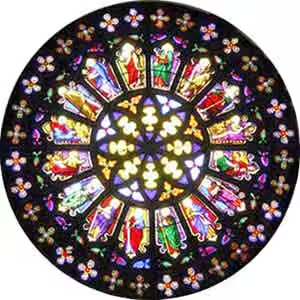
 This church is situated on Stamford Street East and it was originally known as Albion Congregational Church.
The building is Gothic Revival in style erected in 1890/95 to a design by the architect John Brooke of Manchester.
The stained-glass windows were designed by Sir Edward Burne-Jones and made by Morris & Co of London.
The organ was built by Lewis & Co (Thomas Christopher Lewis) of Brixton, South London.
This church is situated on Stamford Street East and it was originally known as Albion Congregational Church.
The building is Gothic Revival in style erected in 1890/95 to a design by the architect John Brooke of Manchester.
The stained-glass windows were designed by Sir Edward Burne-Jones and made by Morris & Co of London.
The organ was built by Lewis & Co (Thomas Christopher Lewis) of Brixton, South London.
Albion United Reformed Church is listed Grade II* under the name, Albion Congregational Church, List Enry No. 1356460.
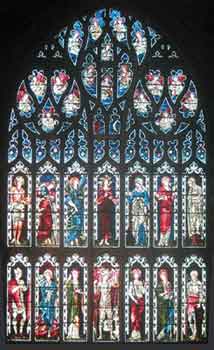
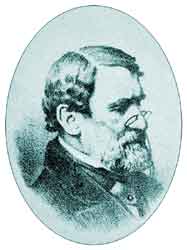
The east window is a memorial to Hugh Mason (1817-1886) who was a local cotton mill owner, social reformer and Liberal politician.
Christ Church
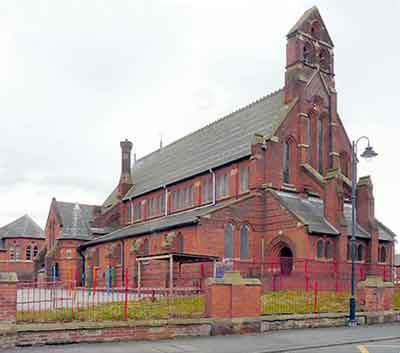
This Anglican church is situated on Taunton Rd/Oldham Rd in the Charlestown district of Ashton-under-Lyne.
It was built in 1846-48 in the Gothic Revival style for the Church Commissioners and the architects were Dickson & Brakspear (Thomas & William Hayward) of Manchester.
It is built of English bond brick with stone dressings and a slate roof.
The church was consecrated on the 17 Jun 1848 by the Rt Revd James Prince Lee, the first Bishop of Manchester.
Repairs to the building were made in 1858-60 and the architect was John Eaton Sr of Ashton-under-Lyne.
John Eaton Sr (27 Jun 1810-21 Apr 1876) was born in the City of Brechin, Forfarshire, Scotland, and in 1839 he moved to Ashton-under-Lyne with his wife, Mary, and family. He was a loyal churchman, being one of the subscribers to Christ Church when it was built. Together with his wife and three unmarried daughters, he is buried at Christ Church, where one of the few remaining stone memorial crosses marks the location of the grave. The family is also commemorated by two stained-glass windows in the north transept of the church given in 1914 by his two surviving daughters, Georgina and Margaret Marjorie.
Christ Church is listed Grade II, List Entry No. 1162769.
Church of St John the Evangelist
This Anglican parish church is situated on the north-west side of Kings Rd, Hurst Cross, Ashton-under-Lyne, about 215 yards from the centre of Hurst Cross.
It was designed in the Gothic Revival style by the architect Edwin Hugh Shellard for the Church Commissioners and it was erected in 1846-49. It is built of rock-faced stone with a slate roof.
The contractors for the stonework were Messrs Eaton & Hallas; roof slating was by Thomas Kenyon; woodwork was by Messrs Garside & Williams; and plastering and painting was by Messrs J & J Boothman.
The almost free-standing, three-stage tower on the south-west corner and transepts were added in 1862 and the architect was George Shaw of Saddleworth. The church has a prominent broach spire with a circular corner stair turret. In architecture, a broach spire signifies the entire construction, where an octagonal spire rises directly from a square tower without the use of corner pinnacles or buttresses. A ‘broach’ is a sloping triangular, or half-pyramidal portion of masonry used to accomplish a smooth transition from a square tower to an octagonal, tapering spire. Four broaches are required, one in each corner of a square tower, and their purpose is to fill the corners where a square tower joins an octagonal spire.
A major benefactor of the church was Oldham Whittaker who was the local owner of Whittakers Mills on Queens Rd to the south east of the church.
The Church of St John the Evangelist is listed Grade II, List Entry No. 1162695.
St James's Church
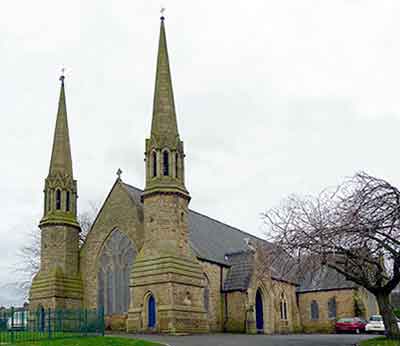
This Anglican church is situated on Cowhill Ln/Union St. It was erected in 1863-65 and the architects were G & J R Shaw (George & John Radcliffe) of Saddleworth.
It is built in the Gothic Revival style of course squared rock-faced stone with ashlar dressings and a slate roof
and it is renowned for its graceful twin broach spires projecting from the western end of the nave.
Each one consists of a three-stage tower surmounted by a spire. The lowest stage of the tower is square while the second stage transforms from square to octagon.
The top stage is an octagon, to accommodate the octagonal spire, and this houses the bells.
St James’s Church is listed Grade II, List Entry No. 1350353.
Holy Trinity Church
This Anglican church is situated on the north-west side of Dean St.
It was erected in 1876-78 and the architects were Messrs Medland and Henry Taylor of Manchester. The contractors were William Storrs & Sons of Stalybridge.
The foundation stone was laid by the mill owner and philanthropist, George Heginbottom* of Ashton-under-Lyne and Birkdale Park, Southport, on the 2 Sep 1876 and the church was consecrated on the 31 Aug 1878.
Holy Trinity Church is listed Grade II, List Entry No. 1084305, and it is presently on the Buildings at Risk Register of English Heritage due to its condition.
Boundary wall, railings, and entrance gateways to Holy Trinity Church
This continuous boundary wall is comprised of brick and masonry walling with intermediate piers, wrought-iron railings and entrance gateways.
Additionally, a drinking fountain is incorporated in a three-bay wall on Portland St N.
Overall, it presents a unified design of different elements, enclosing Holy Trinity Church, the Vicarage and School while expressing the distinctive status of each building.
The Vicarage, Dean St, is listed Grade II, List Entry No. 1084306 and the School, Kenyon St, is listed Grade II, List entry No. 1240247.
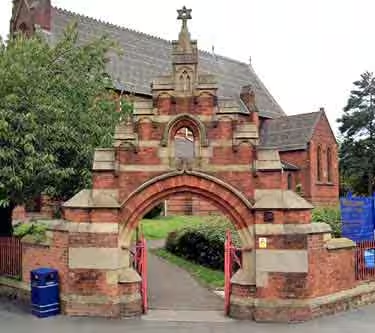
The boundary wall is listed Grade II, List Entry No. 1338883.
St Augustine’s Church
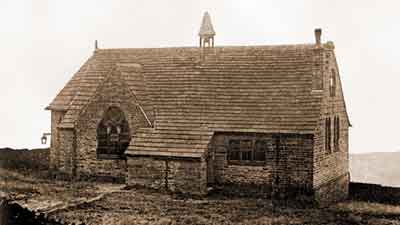
This mission church*, which is no longer active, is situated on the south side of Lily Lanes (53.51416, -2.06516), Hartshead Green.
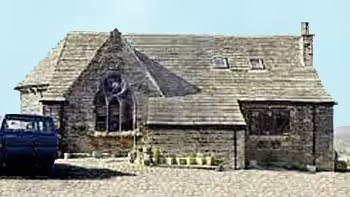
It was erected in c.1850 in the Gothic Revival style and it is built of hammer-dressed stone with a natural-stone roof. The small nave has a lean-to porch and a polygonal apse.
The original porch is on the east side where there is a triple lancet window to the left of the porch and a three-light window to the right of the porch.
The west side originally had four windows with a rose window above the third and fourth windows. The north gable originally had two double lancet windows with a rose window above.
The polygonal apse is at the south end of the church. The south and east faces of the apse each have a lancet window while the west face has a small curvilinear window.
The west side of the pitched roof has two gabled dormer windows. Over the years, the building underwent considerable alterations, especially on the west side and the addition of lights in the roof.
St Augustine’s Church is listed Grade II, List Entry No. 1162713.
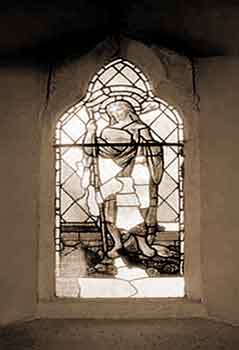
St Augustine of Hippo (354–430 AD) was an early Christian theologian and philosopher whose writings fundamentally shaped Western Christianity and philosophy. Born in the Roman town of Thagaste (now Souk Ahras, Algeria) he served as the Bishop of the Roman town of Hippo Regius (now Annaba, Algeria).
Methodist Church
This church had its origins in 1797 when a small Methodist New Connexion Chapel was built with its frontage set back from the established building line of Stamford St.
It was rebuilt in 1831-32 and the frontage was brought directly onto Stamford St. In 1907 the church merged with the newly formed United Methodist Church and in 1932 this became part of Methodist Church of Great Britain.
The church, which closed in 2006, is located on the corner of Warrington St. It was erected in Flemish-bond brick, two-storeys high, with a gable slate roof, and is 4-bays wide by 7-bays long. The front has a stone plinth with a porch in a tetrastyle Greek Doric design flanked by a window on each side and there are three windows within the gabled tympanum. The ground floor windows all have flat heads while those on the upper floor all have semicircular heads.
Set against the wall on the western (Warrington St) side of the church there are several memorial stones, which are relics from the first chapel on the site and there is a small 20th-century lean-to on the eastern side.
This former church is listed Grade II, List Entry No. 1068003.
On the eastern side of the church, fronting Fleet St, there was a connected Sunday School but this is no longer extant. Across Stamford St, about 74-yards distant, there was a Wesleyan Methodist Chapel but this was demolished in the early 1960s.
